Great Ilford Part 3
Great Places
What do Trolley Buses, the Eurovision Song Contest, an underground munitions factory, park railings and a Titanic survivor all have in common? You are about to find out!
In the previous blog, the Great People of Ilford past and present provided the focus. In this piece, the idea is to highlight many of the locations around the borough which are important landmarks, of general interest or historical significance. Prepare to be surprised and possibly even amazed. Again, due to restricted space, further research is greatly encouraged. A much more detailed version will also be available soon, but in the meantime, here are some edited highlights.
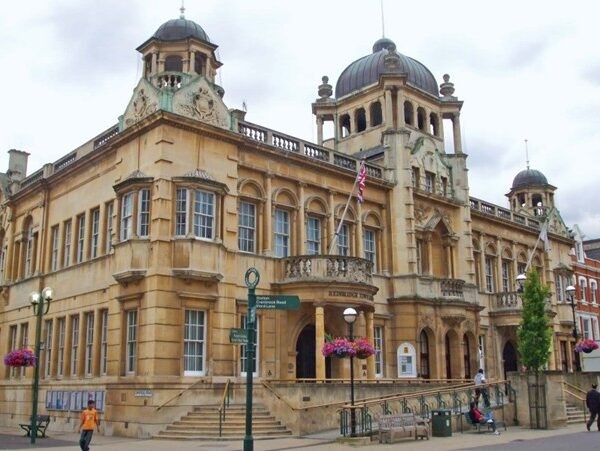
As we approach the Centenary Year, let’s start the tour on the High Road where the process began with a Royal Visit on Charter Day 2026. The Town Hall, built in 1901, is an impressive late Victorian Grade 2 listed building and the centre of civic activity.
The interior is well preserved, parts of which can be hired for functions. One quirky fact sees a connection to Kellogg’s Cornflakes. More of that later.
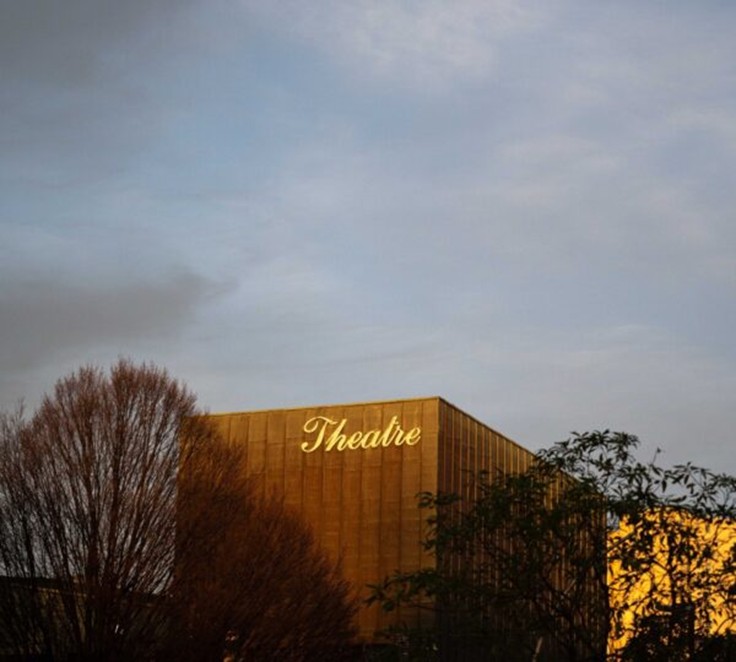
To the side and behind the Town Hall you will find two of the borough’s most important assets. Firstly, the Kenneth More Theatre has been entertaining the community for a little over 50 years. Named after and supported by the much-loved actor, it has provided a wealth of drama, comedy shows, musicals etc, for young and old alike. It has also been the starting point for many budding young actors to launch their careers from as well as showcasing the talents of a host of more seasoned performers.
Credit: Ilford BID
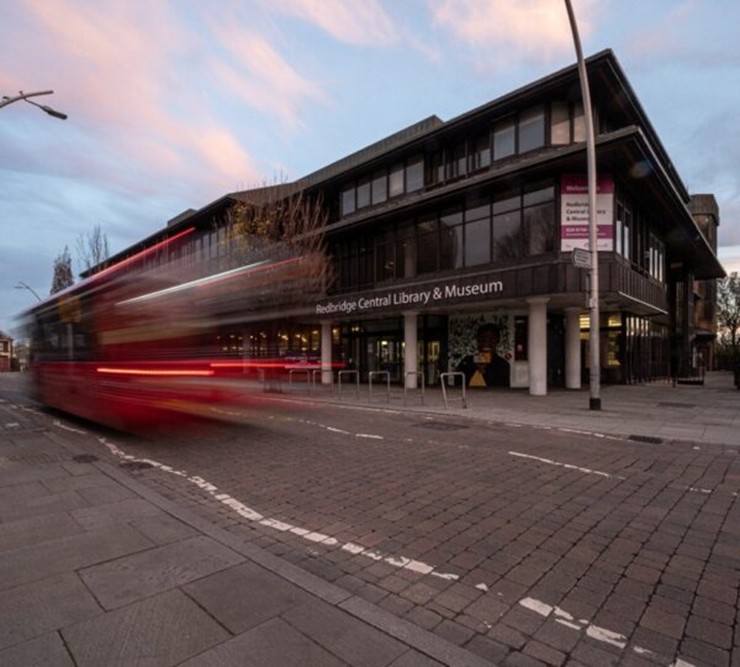
Opposite and located on Clements Road is the Redbridge Central Library. Rather than just a place to borrow books, it is a complete community hub. On the 2 nd floor you will find the Redbridge Museum where 200,000 years of local history are waiting to be discovered. Well worth a visit.
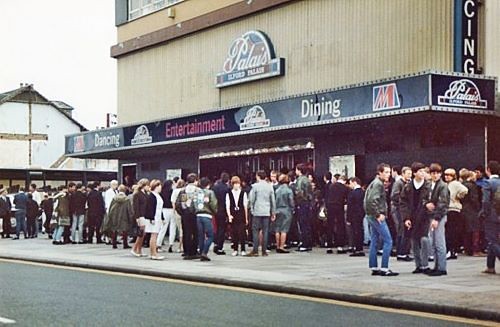
Back on the High Road and close to the junction with Clements Road is the site of the legendary Ilford Palais. Originally a cinema, then a dancehall, later a disco and finally a nightclub, it was considered to be just about the best venue of its type in the whole of East London. Despite being replaced by a block of flats, its iconic status and memory lives on with reunion gatherings of enthusiastic ex-members. Sandie Shaw began her career there by coming 2 nd in a talent show before going on to win the Eurovision Song Contest in 1967.
Credit: Flickr.com
Across the pedestrian precinct is the Exchange Shopping Mall. Opened close to 35 years ago, it remains the proud centrepiece of the area’s thriving shopping experience with an excellent choice of retailers combined with superb amenities. ‘Something for everyone’ sums it up perfectly.
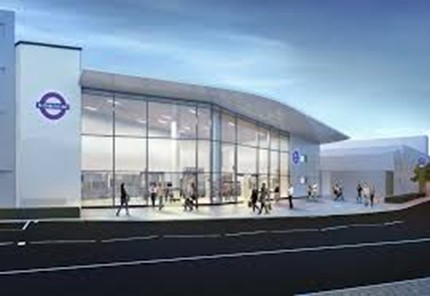
A short walk up the busy High Road brings you to the Broadway and a glance to the right brings Ilford Station into view. When the Great Eastern Railway arrived in 1839, This sleepy little hamlet as was, would never be the same again. Now part of the Elizabeth Line, of course.
Credit: commons.wikimediah
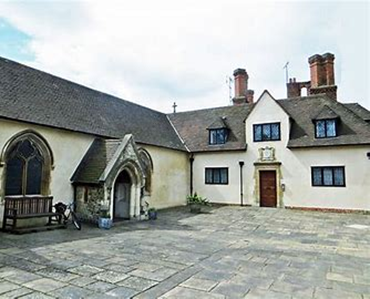
Keep walking a bit further to Ilford Hill and you will come across the oldest remaining building in the town, namely The Hospital Chapel. Founded by the Abbess Adeliza circa 1140 as a charity, it is also Grade 2 listed and also well worth a visit. Opposite was once the Red Lion pub, which was also used as a makeshift fire station towards the end of the 19 th Century.
Just around the corner were the premises of not 1, but 2 notable businesses. Ilford Film and Brittania Music. One was famous for producing world class black and white film and the other for introducing mail order music and for sponsoring the Brit Awards when in its infancy.
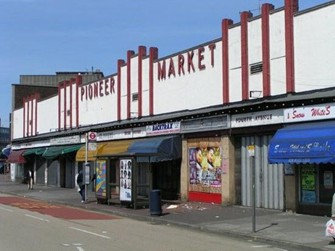
Credit: dustygrain.com Credit: Wikimapia
A stone’s throw away was the site of the locally renowned Pioneer Market which was home to many independent businesses including popular meeting place, Ron’s Music Shop. The two blocks of Pioneer Point have stood on the site since 2011. Going south runs Ilford Lane, with its colourful sari shops and all manner of Asian style food outlets. This busy strip is known to be lively and atmospheric.
Some way down and turning right off Ilford Lane brings you to the historical site known as Uphill Camp, previously a massive Iron Age hillfort. Sadly, virtually all of the visible signs have been lost to redevelopment.
Running north from the Broadway is Cranbrook Road, the town’s 2 nd busiest street and prior to the building of the Town Hall, home to the council offices. Three well-known and much missed Department Stores have also come and gone along this stretch, namely Bodgers, Wests and Fairheads. This is likely as a result of changing times and internet shopping. On the other side of the road was once where Titanic survivor Eva Hart’s father had a pharmacy business. The original building was demolished and replaced in 1935 and is a clear and poignant reminder of the area’s layered past. As a nod to Eva and her family, a little further along you will find the Titanic Café.
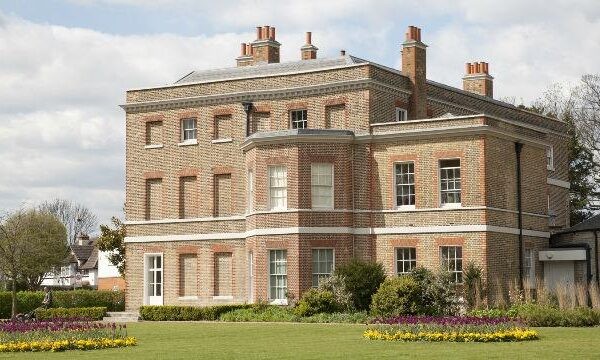
Keep heading in the same direction and you will soon reach an entrance to Valentines Park, one of the town’s most treasured assets. It is the largest green space in Redbridge and winner of the Green Flag and People’s Choice Awards on multiple occasions. It boasts having Valentines Mansion within its Grade 2* listed Gates, Gate-piers and Railings with significant historical connections to the South Sea Bubble, the East India Company, an Archbishop of Canterbury and Oliver Cromwell.
Credit: Visit London
If visiting the park and a history lesson is not on your agenda, then simply take advantage of the many great features it has to offer, including the boating lake, ornamental gardens, children’s playgrounds, outdoor gym, choice of cafes as well as nature in all its glory. It is also the home of Ilford Cricket Club, and once a venue for Essex County matches.
Back in the day it would have seen its fair share of international touring teams with their star players playing warm-up games before taking on the England at bigger and more famous grounds. It was also the venue for the first County Cricket match played on a Sunday, between Essex and Somerset on 15 th May 1966. A crowd of about 6,000 turned up, justifying the somewhat controversial decision.
While on the subject of green spaces, across town, Little Ilford Park was the inspiration for the hit record ‘Itchycoo Park’ by Steve Marriot and the Small Faces in 1967. The name apparently referred to the presence of stinging nettles around the perimeter.
To continue, at the end of this section of Cranbrook Road sits the always busy and for drivers, logistically challenging Gants Hill roundabout, inspiring a former nearby eatery to call itself the 7 Ways Restaurant. On one side, the Odeon Cinema used to dominate the skyline until 2003, but is now just a distant memory. Some may remember it also being used for the busiest and most important Jewish festivals as well as being a popular venue for some of the biggest bands of the day. These included Ian Dury and the Blockheads, Tom Robinson Band and Wishbone Ash.
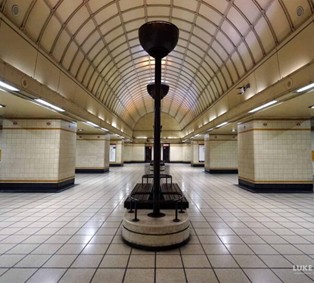
Gants Hill station, on the Central Line, lies directly under the roundabout itself. Before construction was completed in 1947, it was handed over to Plessey Ltd who converted it into a vast, secret, underground munitions factory, employing thousands of mostly local women (1942 – 1945).
Credit: tubemapper.com Credit: Geograph Britain and Ireland
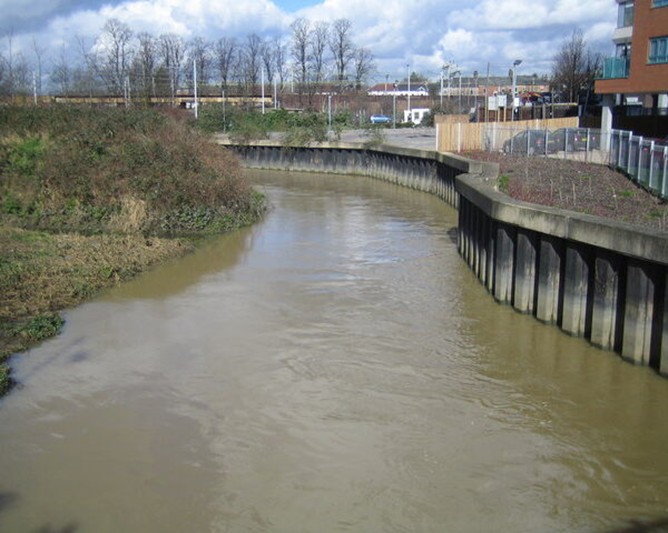
Heading west you will find Redbridge Roundabout and the start of the M11, which in turn connects to the M25 to the north. This is an essential part of the area’s excellent road transport links to the wider world, including London’s three airports. Close by, the River Roding passes under the A12 and is the exact location of the original Red Bridge (since replaced) that gives the modern borough its name. Ilford’s history cannot be told without noting the importance of this river which runs right through it, roughly north to south.
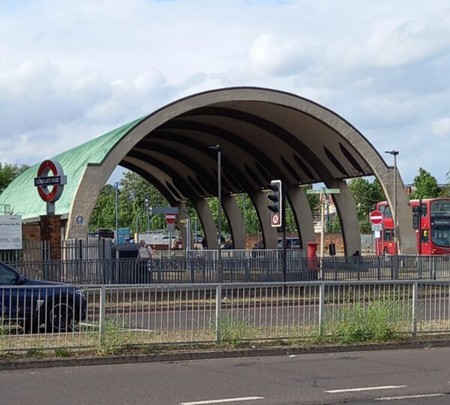
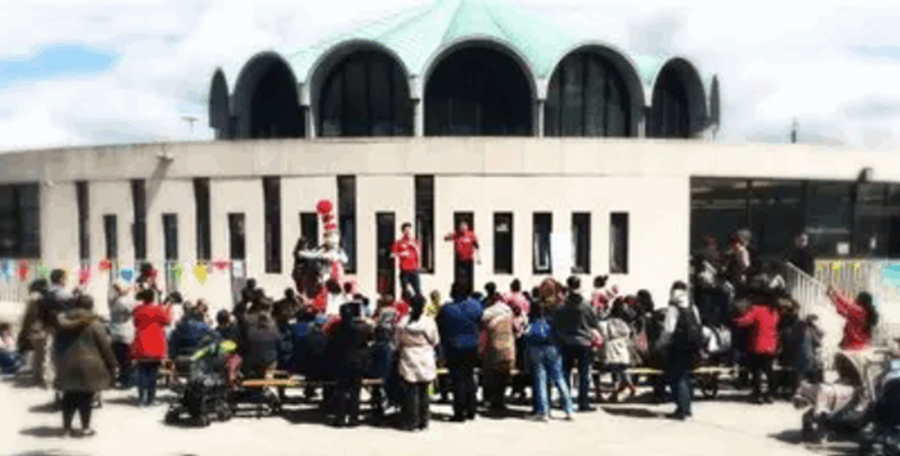
The next Station to Gants Hill going east is Newbury Park. This location is instantly recognisable by its huge, iconic Grade2* curved Bus Shelter. Opened in 1949, it won the Festival of Britain Award in 1951. For the borough to have an architecturally significant bus shelter is almost unheard of.
Credit : Gordon Hobbs
Slightly further east still and turning left at William Torbitt School, named after a former Ilford Director of Education, we find ourselves outside St Peter’s Church. Here we stumble across another virtually unique occurrence. Buried in the churchyard is a Jewish American airman, who died in 1918 after a fatal mid-air collision at Fairlop Aerodrome. What makes this so unusual is that his gravestone carries a Star of David in a Church of England cemetery.
Across the road a little further on is the Dick Turpin pub and restaurant, named after the infamous Highwayman. Dick’s wife is said to have stayed in the house next to the pub, hence the name. Here we have the perfect contrast of hero and villain leaving their mark on the exact same neighbourhood.
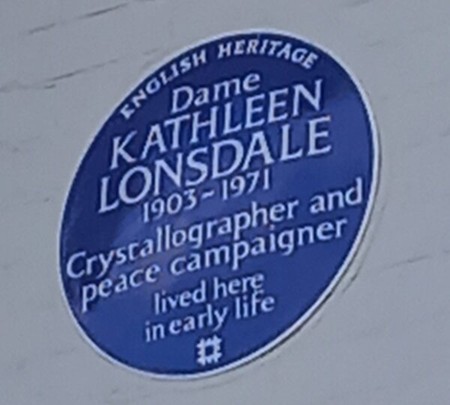
Travelling due south, across the Eastern Avenue will take you past Downshall School, which is where Dame Kathleen Lonsdale began her education. She was a trailblazing crystallographer and peace campaigner and also the 1 st female professor at University College London. In 2021 English Heritage installed a blue plaque at her former home in Colenso Road.
Credit : Gordon Hobbs
Continuing along Aldborough Road South eventually leads you back to the High Road, across the railway bridge for cars (one way only these days) at Seven Kings. On the left is a modern development of apartments which offers no indication of what lay there before. Up until the middle of the 20 th century, this had been the site of Aldborough Cottages, a row of 2 up 2 down dwellings, including the former home of the family who recently celebrated their own Triple Century. 3 sisters all reaching their landmark birthdays. History in the making and exciting times indeed. More soon.
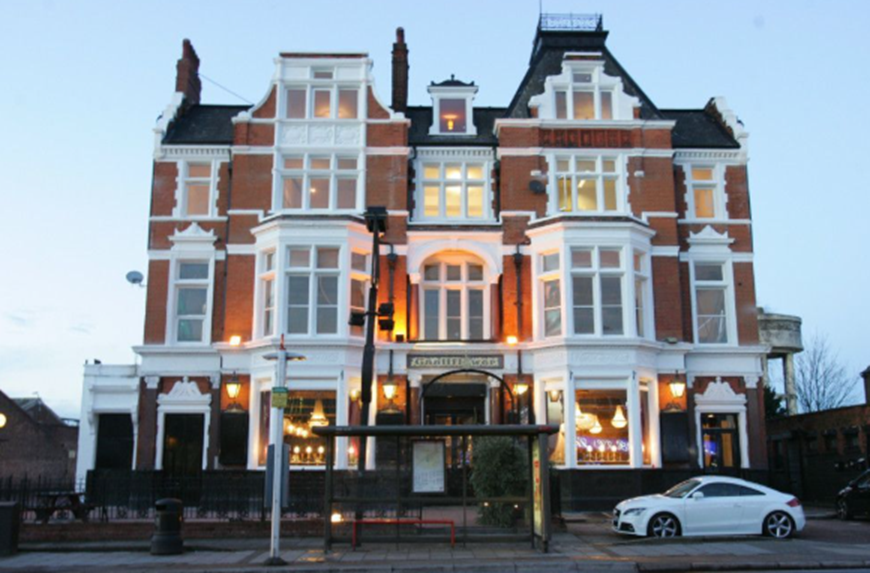
On the right side still stands The Cauliflower pub, a former Victorian Gin Palace and now ripe for conversion into modern apartments. It has many claims to fame but the one that seems most relevant here is that it was the venue for the Hart family farewell party before they set sail on the Titanic.
Cauliflower – Credits Mr Kataria via LinkedIn
Almost opposite were the popular, old Ilford Swimming Baths. A regular activity for many locals for decades until 2008 when it closed its doors for the last time due to safety concerns. Who could forget the simple but effective advertising sign across the back wall of the larger pool urging you to ‘Deep End on Bovril’.
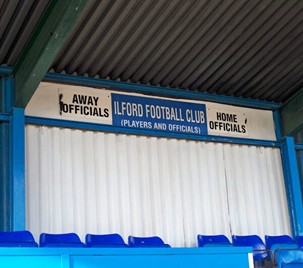
A short walk away and located behind the site of the old Baths is the sports ground known as Cricklefields. It is currently home to Ilford FC as well as its primary function as an athletics venue.
Credit: blogspot.com Credit : Gordon Hobbs
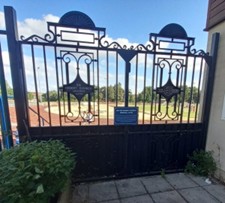
Ilford FC had played at their historic Lynn Road Stadium until 1977 and a strong link to the past are the Sir Herbert Dunnico Memorial Gates which somehow found their way from one site to the other. Dunnico, a former Baptist Minister and Deputy Speaker of the House was President of the football club in the late forties and early fifties.
Crossing back over the High Road and locating the pedestrian railway bridge will eventually lead you to Ley Street. The previously mentioned Plessey Ltd had the main site from the corner of Ley Street down along Vicarage Lane. Pre-World War 2, they successfully made early radio and TV sets for both Marconi and Baird. During the war they mainly built aircraft components and equipment. Thereafter, it grew into one of Britain’s largest and most influential electronics and telecommunications companies. In 1989 it was acquired by GEC and Siemens and the factory has long since been replaced with new housing.
As a matter of interest, we may never have heard of Marconi had he accepted the offer of a ticket on the Titanic where his equipment had been installed. Lucky for him, he chose an earlier crossing on the Lusitania. Nevertheless, it was his invention that helped save at least some of the lives on that fateful voyage. Quite a story!
Incidentally, one house on the north side of Vicarage Lane was the childhood home of Andrew and Eileen Stow MBE. Eileen is currently Chief Executive of Lord Stowe’s Bakery which was started by her late brother Andrew in Macao, a ferry ride across from Hong Kong. Their claim to fame are the Portuguese egg tarts which sell in their thousands every day across the region and beyond. Apparently, Mick Jagger is a fan.
Moving north along Ley Street you will come across two interesting locations. On the corner of Perth Road, part of the Commonwealth Estate, was once the Trolley Bus Garage which had served the town centre and surrounding area. Since being built in the late 19 th century, it had originally been a horse depot and later a tram shed. Without the (possibly deserved) Grade 2 Listed status, it was controversially demolished in 2014 to make way for a new school.
A little further on the right-hand side is the aforementioned Lynn Road with its well-established residential area concealing any sign of the Stadium that once shared its name. Many important matches had been witnessed there, but none more so than the 1948 Olympic Games pairing of newly Independent India and footballing heavyweights France. Most of the Indian team played in bare feet and looked destined to cause a shock, until 2 missed penalties swung the game in France’s favour. The attendance on the day was a little over 17,000 which was more or less full capacity.
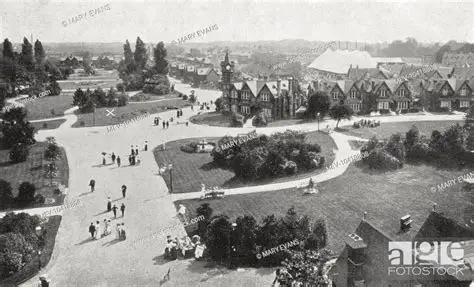
Continuing north across the Eastern Avenue and to the end of Horns Road on the left is the site of probably the most widely known organisation in the borough. Dr Thomas Barnardo established his pioneering Children’s Home in 1876 which was predominantly for girls.
Starting with 13 small ‘cottage home’ style houses, rather than the large, impersonal buildings seen previously, this number eventually expanded to 65. A school, a hospital, a church and even a working farm were added to create a safe, self-contained community.

Credit: agefotostock.com
Today, the ‘village’ still incorporates the headquarters of Barnardo’s together with private homes and the Magistrate’s Court. There is a National Heritage Grade 2* listed Memorial on the site which includes some of the Doctor’s own words. Diana, Princess of Wales visited multiple times during her time as President of Barnardo’s and more recently, Queen Camilla (then Duchess of Cornwall) opened the newly built Head Office. This charitable cause has had Royal patronage since 1902 such is its importance.
Just a stone’s throw away is Barkingside High Street and in particular at the south end is the Police Station. Rumour has it that it has a secret tunnel leading directly under the road to the Magistrate’s Court. The only way to find out for sure might be to get arrested (not to be recommended). Half way down the High Street is Freemantle Road on the left. A short walk from this point is one of the top schools in the area, namely Ilford County High. A multitude of ex-pupils have gone on to achieve great things, including Sir Trevor Brooking and also the late John Lyall, known to be West Ham’s most successful manager.
At the other end of the High Street are the swimming pool and library. The paved area in front is now known as Ken Aston Square. Ken, a former Newbury Park School headmaster was also a World Cup referee. He is credited with introducing red and yellow cards, brightly coloured linesman’s flags and for replacing the traditional referee’s tweed jacket with the more appropriate black refereeing shirt and shorts.
Now, what about the Ilford Town Hall/Kellogg’s Cornflakes connection. Well, in the early noughties the company commissioned a radio advert, featuring a journalist on location who had not yet had a plate of his usual cereal. Clearly confused by a lack of a proper breakfast, he had this to say, ‘Ilford Town Hall? I thought you meant Guildford Town Hall! Not a classic, but a mildly amusing local reference nevertheless.
So, there you have it. A quick spin around the Borough’s ‘hotspots’ from a historical viewpoint. Even then, the surface has really only just been scratched. The striking thing is, it seems, that there is a place of interest just a very short walk away from the last, and the next. The sheer volume and quirky diversity of these locations must surely be hard to match anywhere else. This alone makes Ilford the special place so many of us love to call home and of course, the answer to the question that began this piece. Happy exploring!